OUR APPROACH
How We Create Lasting Change for Children, Women & Communities
Abraham’s Oasis supports vulnerable children, women, and communities through a holistic, locally led model that restores safety, dignity, and a sense of belonging.
Our work is grounded in presence, relationship, and trust, and strengthened by over 20 years of experience in Tigray.
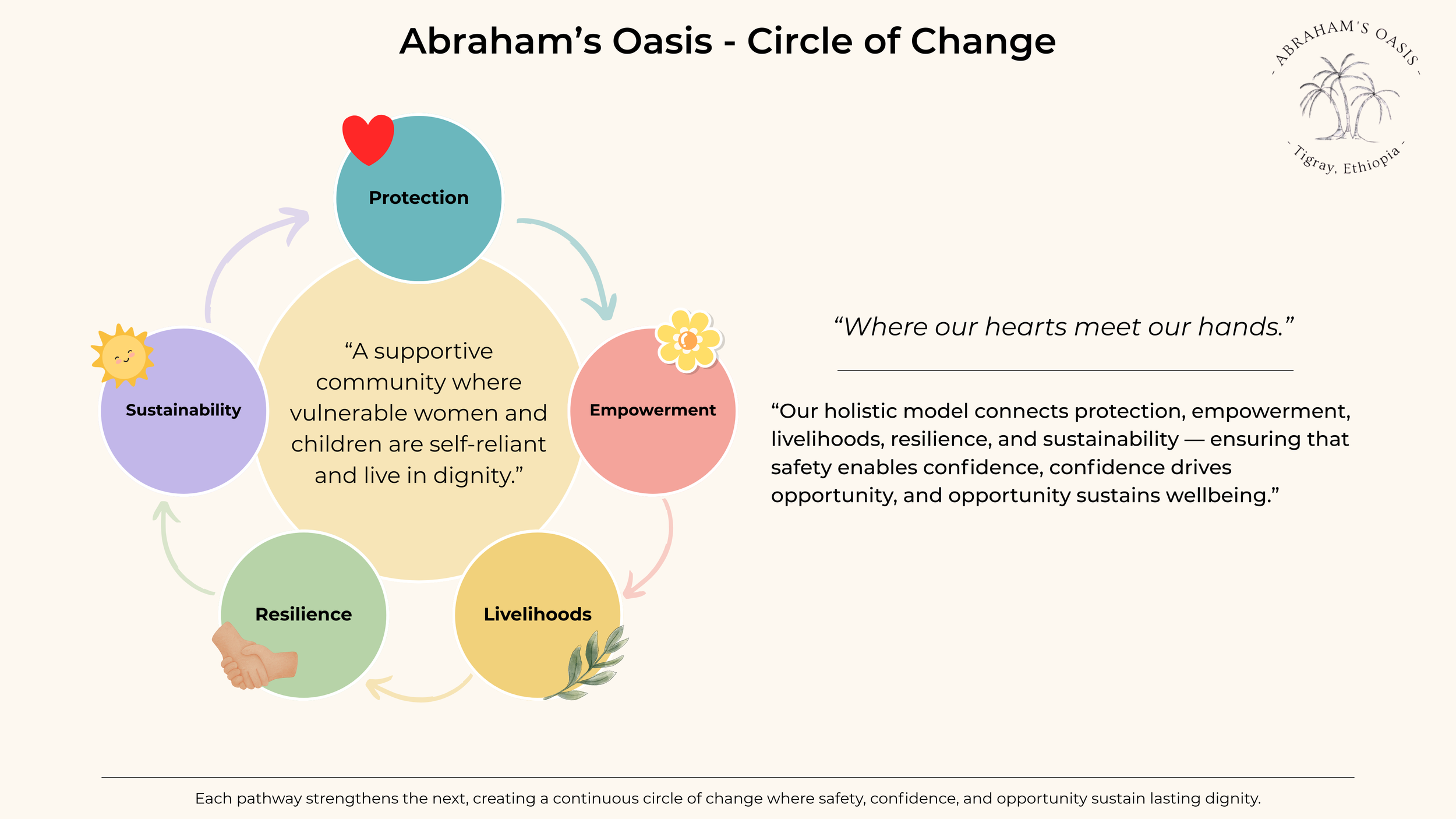
Everything we do follows our Circle of Change, five interconnected pathways that help people move from crisis to long-term stability and independence.
THE CHALLENGE
Violence and neglect remain critical global issues.
Worldwide:
1 in 3 women experience physical or sexual violence (WHO, 2024).
1 in 4 children face abuse or neglect.
Women and children in Africa, especially in Tigray, Ethiopia, are among the most vulnerable due to conflict, displacement, harmful practices, poverty, and limited access to protection services.
The impacts are severe and far-reaching:
trauma and poor mental health
exploitation and abuse
illness and preventable deaths
exclusion and discrimination
illiteracy and school dropout
unintended pregnancies
long-term poverty and instability
Addressing these challenges is essential to achieving the Sustainable Development Goals, especially SDG 5 (Gender Equality), SDG 8 (Decent Work) and SDG 16 (Peace, Justice and Strong Institutions) and contributes to progress in SDG 2 (Zero Hunger), SDG 3 (Good Health and Well-Being) and SDG 4 (Quality Education).
Abraham's Oasis works to break these cycles of harm through a holistic, protection-centred, and empowerment-driven model that restores safety, dignity, and resilience.
WHAT WE DO: THE CIRCLE OF CHANGE
Our Circle of Change outlines the five pathways that support healing and transformation:
Protection
Empowerment
Livelihoods
Resilience
Sustainability
People begin their journey in the Circle of Change at the point that reflects their most urgent needs, and our team supports them throughout their recovery and growth.
OUR FIVE PATHWAYS
1. Protection
We ensure immediate safety and stability through:
Safe Houses for women and unaccompanied children
Grace Village residential care
Emergency support and psychosocial first aid
Family tracing, reunification, and safeguarding
Infant formula support for newborns without mothers
2. Empowerment
We strengthen emotional well-being and personal agency through:
Trauma-informed counselling
Psychosocial support
Life-skills and parenting training
Community awareness on GBV and harmful practices
3. Livelihoods
Economic independence allows families to rebuild with dignity. We provide:
Business and financial literacy training
Seed capital for small enterprises
One year of mentoring and follow-up
Household-level financial strengthening
4. Resilience
We build coping skills and strengthen community systems through:
Confidence-building and decision-making skills
Community-based child protection structures
School and community awareness activities
Dialogue with elders, women's groups, and youth
5. Sustainability
Long-term independence is achieved through:
Stable household income
Continued follow-up after reunification
Strong local partnerships
Strengthened systems for protection and livelihoods
OUTCOMES OF THE CIRCLE OF CHANGE
Short-Term Outcomes (1–5 years)
Safety and healing restored
Confidence and empowerment gained
Economic self-reliance emerging
Families rebuilding stability
Communities engaged in equality
Long-Term Outcomes (5+ years)
Independence and resilience sustained
Communities are cohesive and inclusive
Culture of dignity and protection established
Next generations thriving
Sustainability ensured through follow-up learning
Impact
A supportive community where vulnerable women and children are self-reliant and live in dignity.
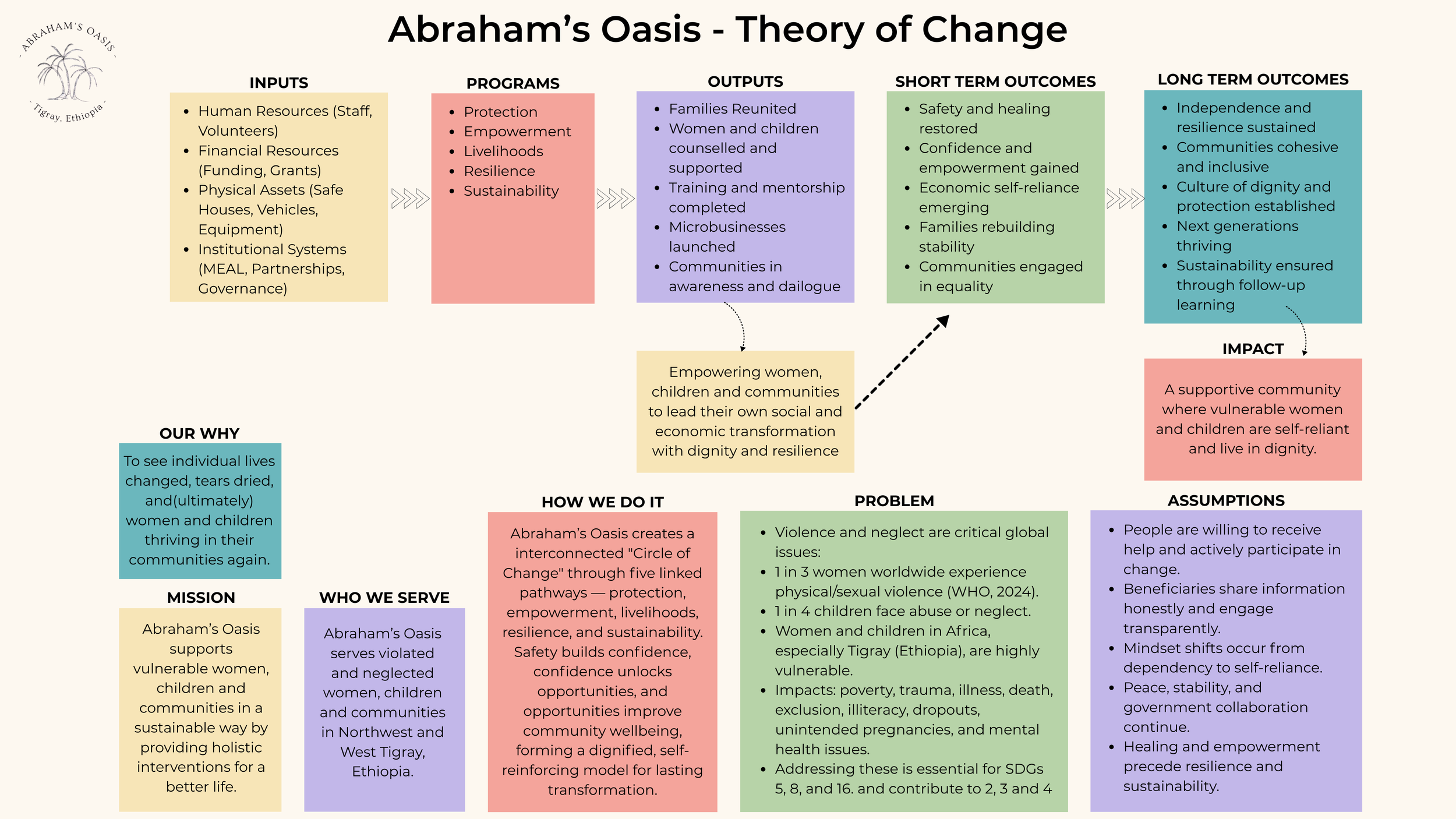
Theory of Change: Programme Logic
(For partners and donors who want deeper insight into our programme logic.)
DOWNLOAD OUR FULL THEORY OF CHANGE
For partners and donors who wish to explore the full programme logic, please download:
Theory of Change Narrative (PDF)
Theory of Change: Programme Logic and Circle of Change (PDF)
WHY OUR APPROACH WORKS
Locally led by skilled Ethiopian professionals
Grounded in presence, dignity, and long-term relationships
Integrates protection, healing, livelihoods, resilience, and community systems
Flexible and adapted to each person's needs
Strengthened through more than 20 years of continuous service in Tigray
Reinforced by partnerships with community leaders, elders, health workers, and government structures
Our model ensures that people not only survive crises but also heal, rebuild, and thrive.